Tracks
-
Gender Sessions
-
Track A (ReAfrikanization)
-
Track B (Family & Institution Development)
-
Track C (Nationbuilding)
-
Track D (Young Adults: 18 – 23)
-
Focus Group
Issues:
- What national and global socio-political, economic and cultural institutions continue to promote or support policies and actions that are detrimental to the Afrikan community and world?
- What developmental and multi-continental, international, national and communal principles, strategies and models currently or historically exist that should inform our efforts in alignment, continuity and expansion with that Afrikan history of development?
- What is the current scope, depth and impact of sustained conscious and unconscious cultural, socio-political, philosophical, historical and continuing socio-psycho-emotional and communal impact of fourteen or more centuries of sustained cultural and societal disruption and misdirection?
- Given the resurgent (world’s highest) growth-rate currently within the Afrikan world, Continental and Diaspora, what techniques, technologies, strategies, principles and practices will be most effective in maximizing the constructive and positive gain for the Afrikan world?
- What is the cultural/ideological basis of a substantive personal relationship?
- What principles and behaviors characterize a substantive personal relationship?
- What role should natal family and community play in mate selection, and sanction of substantive personal relations/mate selection?
- What is the responsibility of men and women respectively in establishing and maintaining substantive relationships?
- What principles and practices facilitate complementarity between fathers and mothers in parenting and minimize conflict?
- What are the major contributing factors to malfunctioning relationships, and how can they be rectified?
(First Year Participants Are Asked to Attend Only ‘Track A’ Workshops)
Workshop 1 • An Afrikan Perspective on History, Culture and Identity: The Historical Spirocycle, Its Significance for Cultural Reconstitution and in the Afrikan World
Convener and Panelist: Yaa Asantewa Neico Sa-Ra, Ishilangu Cesa Salaam
- The Nature and Role of Culture, Historiography, and History in Developing a Conceptual Framework/Construct for National Liberation and Nationbuilding (The Dynamics of History/Culture, Sovereignty and Power)
- The Afrikan and Non-Afrikan Cultural-Cosmological Paradigm: Irreconcilable Realities and The Reality of Perpetual War
- Cyclicality, Time and Natural Order
- The Design, Components and Design of the Historical Spirocycle
- The Spirocycle and ReAfrikanization
- The Sources, Content, Historical-Cultural Context and Contemporary Applicability of the Tenets and
Workshops 2 • Onyame Nhyehyεe; A Paradigm of ReAfrikanization, Nationbuilding and Family Development
Convener and Panelist: YA Ama Nyamekye and Ausar Baba Atiba Coppock
- The Nature and Role of Culture, Historiography, and History in Developing a Conceptual Framework/Construct for National Liberation and Nationbuilding
- The Dynamics of History/Culture, Sovereignty and Power
- The Afrikan and Non-Afrikan Cultural-Cosmological Paradigm: Irreconcilable Realities and The Reality of Perpetual War
- Intergenerational Transmission of culture and worldview
Ankobea Leadership Training Retreat (ALTR)
- Overview ALTR and presentation
- Institutional Provisions for leadership development in community institutions

Track B: Family and Institutional Development
Workshop 1 • Building,Sustaining and Reinvisioning Afrikan-centered institutions
Presenters: B. Baye Kemet, Kamau Grimes, Enna Akua Agyeiman •. Convener: Yaa Asentewa Akoto
- Ensure Institutional Longevity: Develop strategic frameworks for the continuity of organizations, focusing on the successful transition of leadership to the next generation of schools and founders.
- Analyze Educational Paradigms: Evaluate the strengths and limitations of both historic and current models of education to identify best practices for modern implementation.
- Worldview Components: Specific definitions and models and components of worldview
- Nationbuilding Infrastructure: Identify and cultivate new and ongoing development strategies for independent institutions vital to community and national development.
Workshop 2 • Strategies for the impacts of social media and technology on education, health, empowerment, and character development.
Presenters: Mama Mavhu Akoto, Khabeer Salaam, Iya Ifabola •. Convener: Yaa Asentewa Akoto
Technology can change our perception of how we see the world and ourselves. In order to maintain our African centered cosmology and manifest Suban Trenee we must save ourselves and our families from the lies and distortions of popular media.
- Analyze the dual impact of technology on institution building, nationbuilding, and community development to distinguish between real progress and perceived organizing.
- Identify and evaluate effective strategies and models for building and sustaining authentic relationships within African-centered and nation-building organizations.
- Develop practical techniques to neutralize the influence of mainstream popular culture on traditional values, interpersonal expectations, and cultural expressions.
- Formulate methods and strategies to effectively establish and transmit an African-centered worldview when interpreting personal and global affairs.
Workshop 1: Actualizing the Onyame Nhye Hye Paradigm: Complementarity, Balance & Suban Trenee
Convenor: Mzee Kwao • Panelists: Afiya Madzimoyo, Wakesa Madzimoyo,
- What is the impact of modernity on our ability to actualize the ONH paradigm?
- What internal limitations have impeded our growth and development as families and organizations?
- How can we maintain Complementarity, Balance & Suban Trenee in our day to day Afrikan Lifeestyles
Workshop 2: Frameworks that support culture, Suban Trenee and complementarity in nationbuilding.
Presenters: Mzee Kwabena Frempong, Mzee Kwao Agyeman, Nana Ansah Atei • Convenor: Mzee Afua Serwa
- Define and evaluate frameworks for community and family organization that move beyond mere coexistence toward intentional, model-based nationbuilding.
- Analyze the Laws of Maat and Suban Trenee to develop practical strategies for actualizing these ancient principles within modern nationbuilding efforts
- Establish core principles and frameworks for personal and family accountability to strengthen the foundational units of the community.
- Explore the origins of cultural identity through the lens of Suban Trenee to ensure the effective transmission of values across generations.
- Examine the intersectional roles of spirituality, culture, worldview, and character in the long-term development and maintenance of healthy family and community structures.
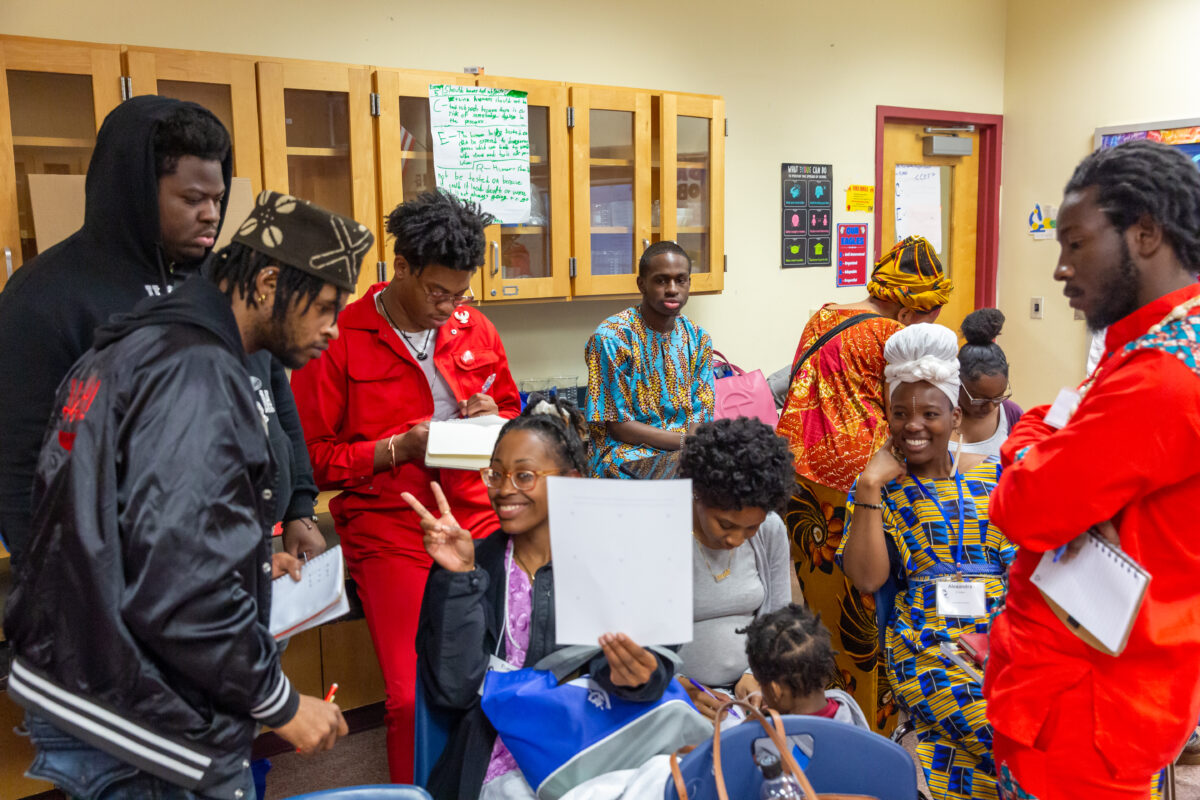
Workshop 1: Onyame NhyehyEe Paradigm: What is it?
Convenor/Presenters: Asukile Allrich and Akua Allrich
- Define and articulate the core tenets of the Onyame NhyehyEe Paradigm, specifically examining how the principles of Complementarity, Balance, and Suban Trenee serve as the foundation for a purposeful life.
- Evaluate the unique roles and systemic challenges faced by young adults (ages 18–23) in the processes of ReAfrikanization and the intentional development of the family unit.
- Understand strategies for intergenerational transmission, focusing on the practical methods by which culture and worldview are passed down and sustained across generations.
Workshop 2: Managing Social Media and It’s Impact.
Presenters: Sister Ife Wisdom and Baba Anokwa Jackson | Convenor: Asukile Allrich and Akua Allrich
- Identify and implement effective strategies for managing social media use to ensure it supports, rather than hinders, the building and sustaining of authentic communal relationships.
- Develop proactive methods to neutralize the influence of mainstream popular culture, specifically focusing on protecting Afrikan-centered values and expectations regarding relationships and self-expression (kwk)
- Critically examine the impact of technology on young adults within Afrikan-centered communities, distinguishing between real and perceived development and organizing
Focus Group 1: Afrikan Mental Health and Well-being
Convenor: Yaa Asantewa Zena Wingate. |. Panelists: Yaa Asantewa Kanika Fluellen
In this compelling workshop, we embark on a deep dive into the facets of Afrikan mental health and well-being, acknowledging the unique challenges and strengths within the Afrikan community. Our journey is twofold: understanding the historical and societal influences that have shaped mental health perceptions and exploring contemporary strategies for nurturing resilience and healing.
Participants will gain insights into the impact of systemic racism, microaggressions, and cultural trauma on mental health, while also celebrating the rich traditions of resilience and community support that characterize the Black experience. Through a mix of interactive discussions, personal reflections, and expert-led sessions, we aim to create a safe space for sharing and healing.
Focus Group 2: Strategies for Community Organizing with the ON Paradigm
Convenor: Mzee Kwao Magloire and Osei Akoto
This workshop is perfect for community activists, organizers, students, and anyone interested in the principles of the ON Paradigm and community organizing specific to the Afrikan community. Whether you are looking to initiate a new project, strengthen your organization’s impact, or simply learn more about effective community organizing, this workshop offers valuable insights and practical strategies to enhance your efforts. Join us to connect with like-minded individuals, share experiences, and collaborate towards a stronger, more unified community.